You engineered the product.
Now engineer the revenue.
Revenue is not a team you hire. It is a system you engineer. We build the commercial
operating system underneath the sales org: pricing, packaging, forecasting, ICP,
partnerships, governance. Then we run it with you.
Entry point: CRO as a Service. Destination: Commercial Operating Partner.
Operator experience across
ServiceNow
New Mountain Capital
AI-native healthcare
Private equity
Enterprise SaaS
The problem
The product gets engineered. The revenue gets improvised.
Companies rarely fail because they hired the wrong salespeople. They fail because they
built people before they built the system those people run on. Everyone builds product
first. Everyone hires sales second. Almost nobody engineers the commercial system
underneath. That is where we live.
The operating thesis
Commercial isn't a department. It's a system.
Most firms optimize sales: better reps, more activity, another tool. We optimize the
machine sales runs on. Seven functions, engineered as one system rather than assembled
as separate tactics.
01Pricing
02Packaging
03Forecasting
04ICP
05Partnerships
06Governance
07Monetization
A commercial operating system compounds. Individual tactics do not.
Most companies don't have a sales problem. They have a commercial architecture problem.
Operator track record
Built. Operated. Scaled.
$600M
Healthcare-AI company built from zero and exited to New Mountain Capital, as CEO operating partner on board strategy and integration.
$204M
Net-new ACV monetized across three enterprise-software business units through pricing and packaging strategy.
4
Commercial organizations built from zero: customer success, commercial strategy, deal desk, and partnerships.
$2B+
Private-equity transactions on the deal side: structuring, diligence, and value creation through exit.
New-business deal size +110%, upsell +250%, and 200%+ net revenue retention with zero ICP churn, from pricing and packaging redesign.
The Ladder
Three tiers. Same operator. Increasing commercial altitude.
Every engagement starts where the business actually is, and is built to climb as the
commercial problem changes shape, from operational stability to enterprise value.
I
Foundation
Operational Stability
CRO as a Service
Founder-led software companies without a revenue leader, where the founder still owns sales and the commercial system was never actually built.
ICP definition & targeting: who to sell to, and why
Pipeline, routing & forecasting you can trust
Pricing and deal discipline from day one
CRM and sales process architected right, not just administered
Weekly pipeline & operating cadence
The revenue system built before your first sales hire
Documented sales motion & rep-onboarding playbook
Outcome A revenue engine a founder can run on, and a CRO's judgment without the full-time hire.
II
Acceleration
Commercial Discipline
CRO as a Service + Deal Desk
A scaling sales org: multiple AEs, rising deal complexity, and mounting pressure on pricing and approvals.
Everything in Foundation, plus
Deal desk & commercial approvals
Pricing & discount governance
Packaging & renewal strategy
Comp plan & quota design
Contract review & commercial policy
Forecast governance & territory design
Deal desk & pricing-governance playbook
Outcome Larger deals, faster cycles, and better margin protection.
III
Scale
Enterprise Value
Commercial Operating Partner
Series B+, PE-backed, preparing for scale, a raise, or an exit, and pursuing full commercial transformation.
Everything in Acceleration, plus
Commercial Value Model & ROI architecture: the ROI story your raise is underwritten on
Monetization strategy: transaction, value, and outcome-based models
AI monetization & packaging
ICP, retention & expansion strategy
Commercial governance, KPI & board cadence
Commercial diligence & raise readiness
The commercial operating playbook, codified for diligence
Outcome Revenue growth, margin expansion, retention, and enterprise value.
AI-native commercial systems
We don't implement AI. We engineer the commercial system around it.
AI-native businesses face commercial questions the last generation never had to answer.
How do you price consumption when cost scales with usage? How do you package a product
that improves itself? How do you forecast and govern revenue when the unit economics
keep moving? We built the GenAI commercial model across a multi-billion-dollar software
portfolio, and the commercial engine of an AI-native healthcare company through a $600M
exit. Engineered, not guessed.
Usage & consumption pricing
AI packaging & monetization
Commercial governance for AI economics
Founder-led AI go-to-market
Selected operator work
The model, proven in the seat.
This is not a case study of someone else's playbook. It is the operating model the founder built and ran.
AI-native healthcare automation
Situation
Product-market fit, but no commercial system. Pricing, packaging, and go-to-market assembled ad hoc.
Problem
Deal size, retention, and forecast credibility were all exposed to a motion that was improvised, not designed.
Approach
Built the commercial function from zero. Engineered value-, transaction-, and outcome-based pricing; stood up deal desk, customer success, and commercial governance.
Result
New-business deal size +110%, upsell +250%, 200%+ NRR with zero ICP churn. Contributed to a $600M exit to New Mountain Capital.
Enterprise IT & security software
Situation
New GenAI capabilities across three business units with no commercial model. Pricing and packaging undefined.
Problem
New AI capability risked being underpriced, mispackaged, and impossible to forecast or govern at scale.
Approach
Architected the GenAI pricing framework, packaging tiers, and discount governance. Launched a partner-led MSSP motion from zero.
Result
$204M net-new ACV over 30 months, including $20M+ from the new partner-led offering.
Private equity value creation
Situation
Sponsors and founders needing a commercial thesis that holds up in diligence and through exit.
Problem
Commercial risk and upside were hard to underwrite without a rigorous, defensible view of the revenue engine.
Approach
Deal-side commercial structuring, diligence, and value-creation planning across $2B+ in transactions.
Result
A commercial narrative underwriting sponsor conviction, from structuring through successful exits.
The operator
Built by someone who has built the machine.
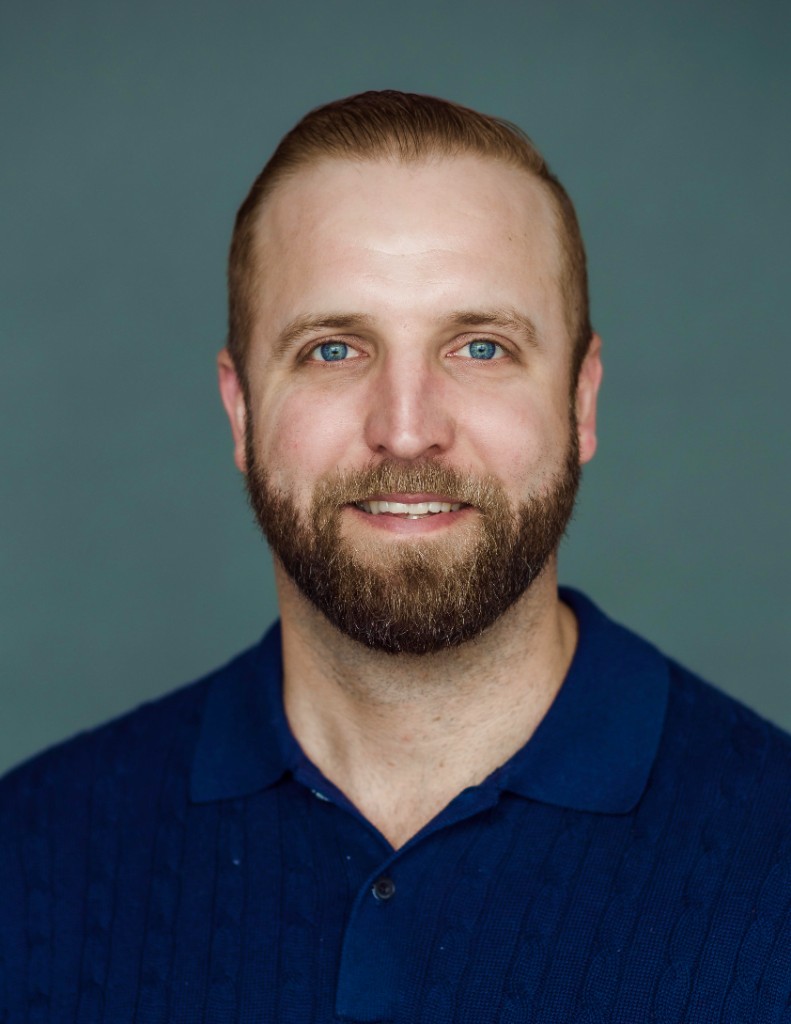
Nick Faber has spent his career engineering commercial systems. Pricing and monetization
at ServiceNow across a multi-billion-dollar software portfolio. The commercial operating
model of an AI-native healthcare company, from zero through a $600M exit, as CEO
operating partner. The deal side of $2B+ in private-equity transactions. Enterprise
software, pricing, partnerships, AI monetization, and commercial operating systems, not
as a consultant, but as the operator who built and ran them.
Commercial value creation
Pricing & monetization
AI commercialization
Partnerships & GTM
PE diligence & integration
Board-level operating
Why a Commercial Operating Partner
We fill the seat the market leaves empty.
Not consultants. Not RevOps. Not CRM implementers. Not an agency. Commercial Operating Partners.
Not a strategy firm.
Strategy firms diagnose and leave. We stay and operate the engine we design, accountable to the outcome, not the deliverable.
Not a RevOps consultancy.
Most RevOps firms come from CRM administration or marketing ops. We bring board-level commercial strategy and PE value-creation experience to the same seat.
Fractional, not overhead.
Commercial diligence runs seven figures for a one-time thesis. A full-time commercial leader is a high six-figure loaded cost, for one company. We're embedded, productized, and accountable across a focused portfolio.
What we believe
A few things we hold to.
The CRM usually isn't the bottleneck.
Pricing decisions compound faster than hiring decisions.
You can't hire your way out of a system problem.
Commercial architecture is a moat. Sales tactics are not.
Questions
For the executive doing the diligence.
What is a Commercial Operating Partner?
An embedded operator who builds and runs the commercial operating system: pricing, packaging, forecasting, ICP, partnerships, governance, and monetization. Not advice on the side. The system itself, owned and operated with you.
How is this different from RevOps?
RevOps administers the tooling. We architect and run the commercial strategy the tooling serves. RevOps comes from CRM. We come from pricing, monetization, and PE value creation, and we stay accountable to revenue, margin, and enterprise value.
When should a founder bring one in?
When the founder still owns sales and the system underneath was never built, or when a scaling org has outgrown improvised pricing and forecasting. Ahead of a raise, a scale phase, or an exit, when the commercial story has to hold up in diligence.
How do engagements work?
We start with a Commercial Operating Assessment, then build the system and run it on a retainer, scoped to deliverables and operating cadence. The relationship climbs the ladder as the commercial problem changes shape.
Who is an ideal client?
Growth-stage and PE-backed software companies, often founder-led or run by a single sales leader, that have product-market fit and are ready to engineer revenue with the same rigor they gave the product. Healthcare AI and AI-native businesses are a particular focus.
Start here
Start with a Commercial Operating Assessment.
Two weeks to a clear read on your commercial system: where revenue is engineered, where
it is improvised, and what to build first. Credited in full toward any engagement you
start within 30 days.